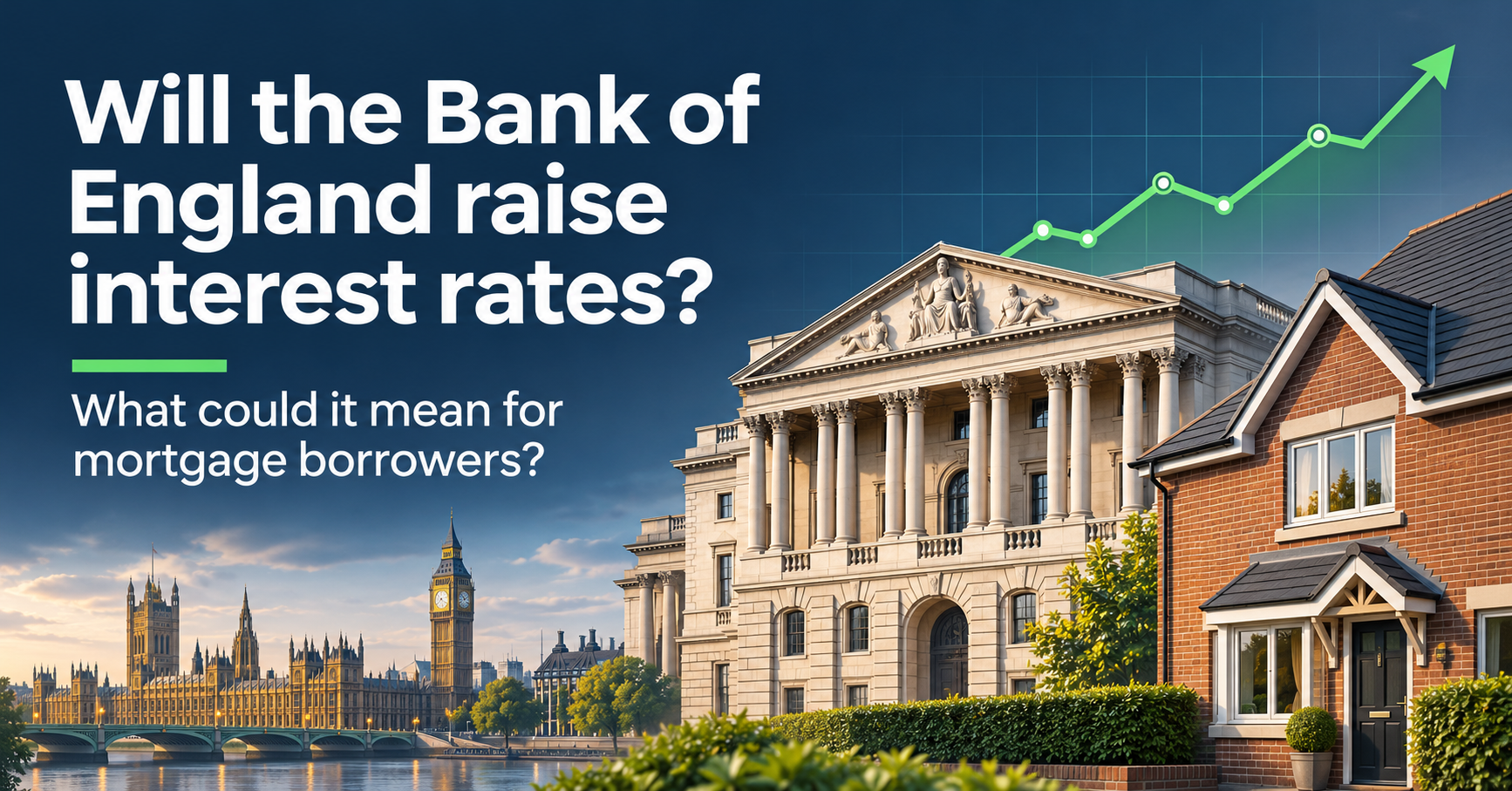
Will the Bank of England raise interest rates on 5 November?
Will the Bank of England raise interest rates on 5 November?
What the latest inflation, economic and mortgage-market data could mean for borrowers
The Bank of England’s Monetary Policy Committee will announce its next interest-rate decision on Thursday 5 November 2026.
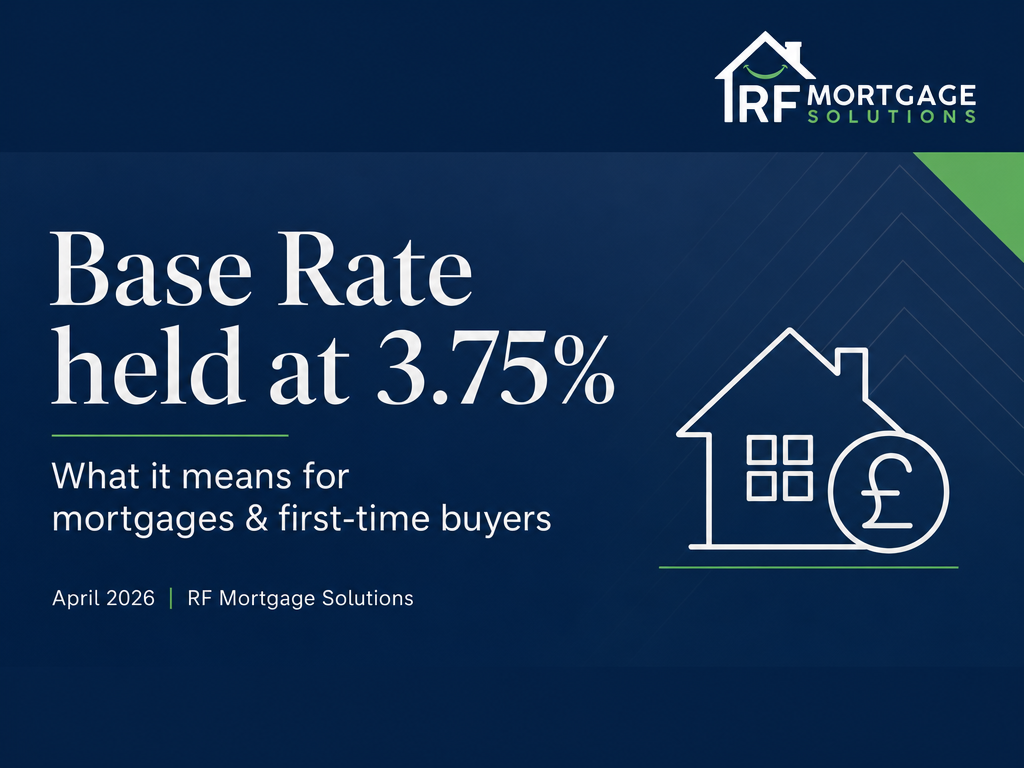
The Bank Base rate is currently 3.75%, but an increase to 4.00% is widely expected. However, the decision has not yet been made, and we will not know the outcome—or how the individual committee members voted—until the announcement.
So, what is influencing the decision, and what could it mean for mortgage borrowers?
Why is a Bank Rate increase expected?
The main concern for the Bank of England is inflation.
The latest figures from the Office for National Statistics show that CPI inflation increased from 3.1% in August to 3.5% in September, moving further above the Bank’s 2% target.
Higher fuel and energy costs were important contributors, but the rise was not limited to energy. Core inflation, which excludes energy, food, alcohol and tobacco, increased to 2.8%, while services inflation rose to 3.7%.
The Bank will be watching closely to see whether higher energy costs are beginning to feed more widely into wages, business costs and the prices charged for other goods and services.
At its previous meeting in September, the Monetary Policy Committee voted by six members to three to keep the Bank Rate at 3.75%. The three dissenting members preferred an immediate increase to 4.00%.
Since then, inflation has risen more than previously forecast, strengthening expectations that a majority of the committee may now support an increase.
What is happening in the wider economy?
The economic picture is mixed. The UK economy grew by 0.7% in the three months to August, although growth slowed to just 0.1% during August itself. The labour market also remains relatively subdued, with unemployment at 4.7%, fewer vacancies and fewer payrolled employees than a year earlier.
This creates a difficult balance for the Bank of England. It needs to prevent inflation from becoming more persistent without increasing borrowing costs by more than the economy can withstand.
The Office for Budget Responsibility currently forecasts that inflation could peak at around 3.8% in early 2027 before returning to the Bank of England’s 2% target around the middle of 2028.
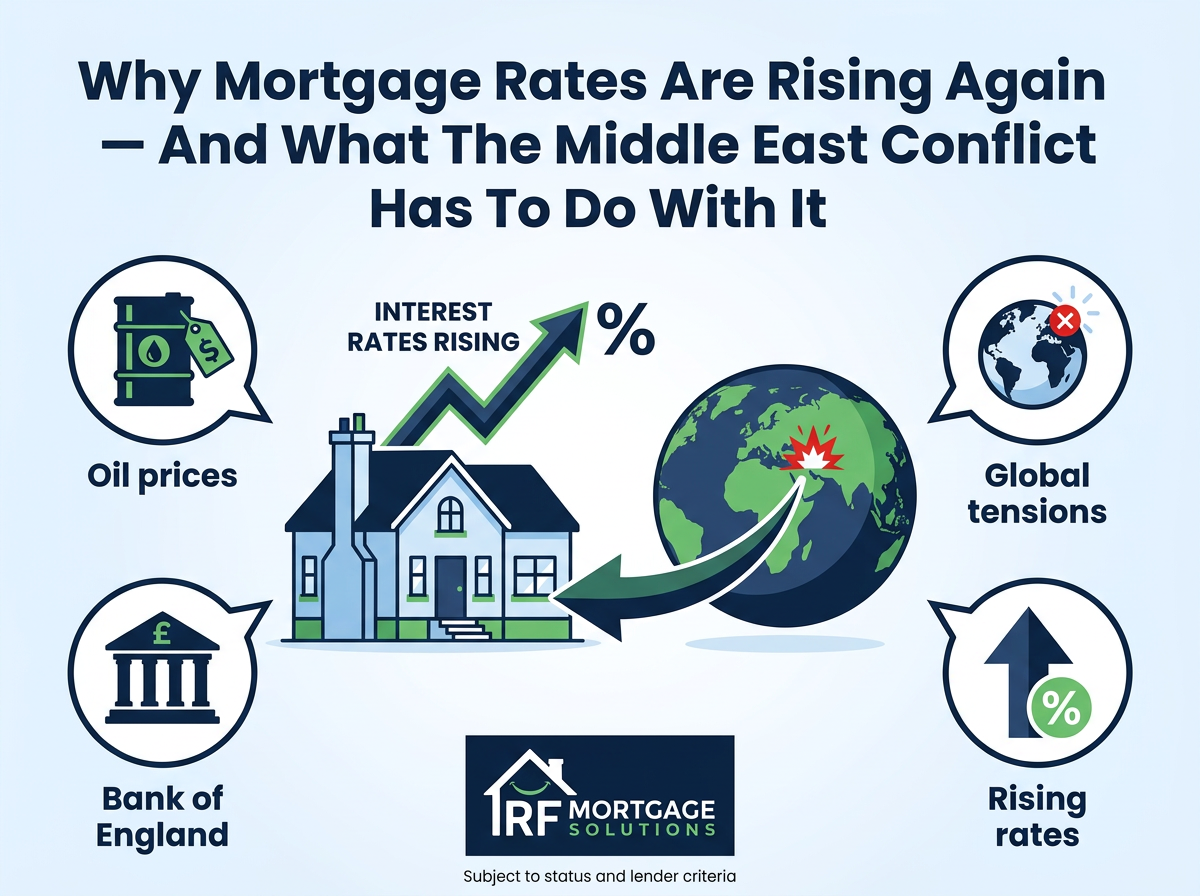
However, forecasts are not guarantees. The outlook remains uncertain and will be influenced heavily by energy prices, events in the Middle East and whether higher costs spread into wages and wider business pricing.
What effect did the Budget have?
Ahead of the recent Budget, there were concerns that higher government borrowing or unexpected policy announcements could unsettle the gilt and swap markets.
The Budget did not cause the significant market disruption that some had feared. Gilt prices remained relatively stable, while swap rates have eased slightly from their recent highs.
This may give some mortgage lenders scope to reduce selected fixed rates. However, lender pricing is likely to remain changeable, particularly while inflation and the future path of Bank Rate remain uncertain.
A Bank Rate increase on 5 November would not automatically mean that every fixed mortgage rate will rise. Equally, the Bank Rate remaining unchanged would not necessarily cause fixed rates to fall.
What is happening to mortgage rates?
According to Moneyfacts, as at 2 November 2026, average residential fixed mortgage rates across all loan-to-value bands were approximately 5.97% for two years and 6.00% for five years.
These are overall market averages rather than the rates available to every borrower. Rates are generally lower for borrowers with larger deposits or more equity. For example, Moneyfacts reported average rates at 60% loan-to-value of approximately 5.44% for a two-year fix and 5.64% for a five-year fix.
The actual rate available will depend on several factors, including:
- The mortgage amount and property value
- The available deposit or equity
- Income and affordability
- Credit history
- The type of property
- Product fees and incentives
- The individual lender’s criteria
Source: Moneyfacts – Fixed-rate mortgages and market averages
Source: Bank of England – Money and Credit, September 2026
Why can fixed mortgage rates change before the Bank Base Rate?
Fixed mortgage rates are influenced by swap rates, lender funding costs and financial-market expectations—not simply by the current Bank Base Rate.
Swap rates reflect what financial markets expect interest rates to average over a particular period. If markets expect the Bank Rate to rise, fixed mortgage pricing may increase before the Bank of England makes its decision.
The reverse can also happen. If an expected increase has already been reflected in swap rates, fixed mortgage rates may remain stable—or selected products may even be reduced—after the Bank Rate rises.
This is why waiting for an MPC announcement does not necessarily result in a better mortgage rate.
What this means for you
Variable and tracker-rate borrowers
If the Bank Rate increases by 0.25 percentage points, borrowers with tracker mortgages will normally see a corresponding increase in their mortgage rate and monthly payment.
Standard variable rates are set by individual lenders, so any change will depend on the lender’s decision.
Some tracker mortgages remain below current fixed rates and may offer benefits such as no early repayment charges or the ability to switch to a fixed rate without a fee. However, borrowers need to be comfortable with the possibility that their payments could increase if Bank Rate rises further.
Fixed-rate borrowers
If your current fixed rate ends within the next six months:
It would be sensible to review your options now rather than waiting for certainty. Many lenders allow a replacement product to be secured several months in advance. The position can then be reviewed again before completion if more suitable rates become available.
If your current fixed rate has longer remaining:
There is usually no need to take immediate action. However, it is worth checking when your deal ends, understanding any early repayment charges and starting the review process well before the expiry date.
Will interest rates continue to rise?
An increase to 4.00% is widely expected on 5 November, but the outlook beyond that is less certain.
Financial markets have previously priced in several additional increases during 2027. Economists are more divided, with many expecting an increase in November but no clear agreement over how many further rises may follow.
Much will depend on whether inflation continues to increase, whether higher energy costs become embedded in wages and prices, and how the wider economy responds to higher borrowing costs.
For that reason, borrowers should avoid making decisions based solely on predictions about where interest rates may move next.
Reviewing your mortgage options
The right mortgage will depend on your individual circumstances, attitude towards risk and future plans.
If your existing rate is due to end within the next six months, or you would like to understand how the changing outlook could affect your mortgage, please get in touch with RF Mortgage Solutions for a review.
Mortgage Advice Made Simple.