Should You Overpay Your Mortgage? The Pros and Cons
Should You Overpay Your Mortgage? The Pros and Cons
For most UK homeowners, a mortgage is the single biggest financial commitment they’ll ever make. It’s also one of the longest — stretching over 20, 25, or even 40 years. So, it’s natural to wonder whether making extra payments could help you become mortgage-free sooner and save interest on your mortgage along the way.
Let’s unpack the pros and cons of overpaying your mortgage — and whether it’s the right move for you.
What Does It Mean to Overpay Your Mortgage?
When you overpay your mortgage, you’re paying more than your required monthly payment. That extra amount goes directly toward reducing your outstanding balance, which in turn lowers the total interest you’ll pay over time.
Overpayments can be:
- Regular (e.g. adding £100 extra each month), or
- One-off lump sums (e.g. paying an extra £1,000 when you receive a bonus or inheritance).
Even small, consistent overpayments can make a surprising difference over the life of your mortgage.
The Pros of Overpaying Your Mortgage
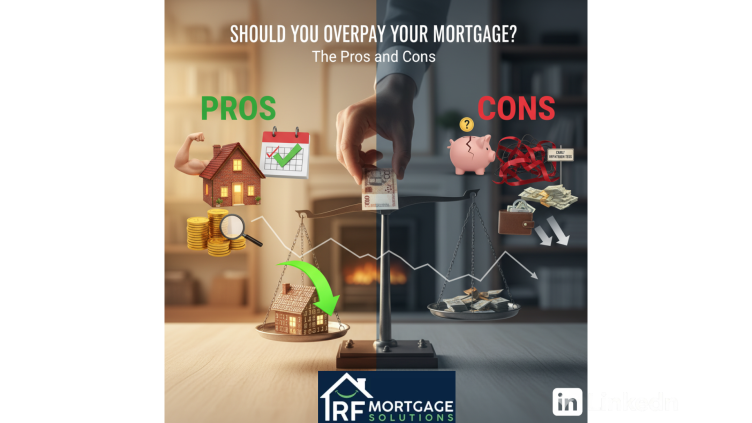
🏠 1. Save Interest on Your Mortgage
This is the biggest advantage. By reducing your balance early, you’re effectively cutting the interest charged on that amount. For example, if your mortgage rate is 5%, every extra £1,000 you overpay saves you roughly £50 a year in interest — every year until your mortgage ends.
Over time, that could add up to thousands of pounds saved.
⏳ 2. Become Mortgage-Free Sooner
Making overpayments can shorten your mortgage term by several years. That means reaching financial freedom earlier and freeing up money for other goals — travel, retirement, or even investing in another property.
💪 3. Guaranteed Return
Unlike investing in the stock market, overpaying your mortgage provides a guaranteed return equal to your interest rate. If your mortgage rate is 5%, you’re effectively earning a risk-free 5% return — something hard to find elsewhere.
📉 4. Reduce Long-Term Risk
With a smaller mortgage balance, you’re less exposed to interest rate increases when your fixed term ends. This can make future remortgaging easier and more affordable.
The Cons of Overpaying Your Mortgage
⚠️ 1. Early Repayment Charges (ERCs)
Many UK mortgages have limits on how much you can overpay without penalty — often up to 10% of your balance per year during a fixed-rate period. Paying more than that can trigger early repayment charges, which might offset your savings. Always check with your lender before making large overpayments.
💸 2. Less Cash Flow Flexibility
Once you’ve overpaid, that money is tied up in your property. If an emergency arises or you need funds for another purpose, it’s not as easy to access. Some lenders allow you to “borrow back” overpayments, but not all do.
📊 3. You Might Get Better Returns Elsewhere
If you have high-interest debts or can invest your money at a higher rate of return than your mortgage interest, it might make more sense to focus there first. Overpaying is smart, but it’s not always the best use of your spare cash.
When It Makes Sense to Overpay
Overpaying often makes sense if:
- You’re on a fixed-rate deal with a reasonable ERC-free limit.
- You’ve already built an emergency savings buffer.
- You want to reduce your loan-to-value (LTV) ratio before remortgaging — which can help you qualify for better rates.
Even £50 or £100 extra a month can make a big difference over time.
When to Think Twice
If you have high-interest credit cards, personal loans, or no rainy-day savings, focus on those first. Also, if you’re on a very low mortgage rate (say 2%) but could earn more by investing, overpaying might not be your top priority.
A Balanced Approach
Many homeowners find that a balanced approach works best:
- Keep an emergency fund.
- Pay off expensive debts.
- Then start making manageable mortgage overpayments.
It’s not an all-or-nothing decision — you can adjust your overpayments as your circumstances change.
Final Thoughts
Overpaying your mortgage can be a smart and satisfying way to save interest on your mortgage and reach financial freedom sooner. But it’s worth reviewing your overall financial picture — and your lender’s terms — before deciding.
At RF Mortgage Solutions, we help homeowners across the UK understand their options, whether that’s overpaying, remortgaging, or finding a better deal.
If you’d like a quick, no-obligation chat about your mortgage strategy, feel free to get in touch — we’re always happy to help.